How to Connect HDPE Pipes to PVC Pipes: A Guide to Proper Connections
Connecting HDPE pipes to PVC pipes requires careful consideration because the two materials have different properties and joining requirements. Using an incompatible connection method or the wrong fittings can lead to weak joints and increase the risk of leaks.
So, how can you connect HDPE pipes to PVC pipes properly? This guide covers the available connection methods, the components required, and practical tips for achieving secure, reliable connections.
How to Connect HDPE Pipes to PVC Pipes
Connecting HDPE pipes to PVC pipes generally involves a mechanical joint method. This is because the differences between HDPE and PVC materials mean that welding and adhesive bonding methods cannot be used to join them directly.
Before starting, check the diameters of both pipes and the operating pressure of the installation. Then, you can apply the following mechanical joint methods.
How to Connect HDPE Pipes to PVC Pipes Using a Stub End Flange
A stub end flange helps connect HDPE pipes and PVC pipes with a strong connection that can be disassembled when network maintenance is required. The Plastics Pipe Institute (PPI), a North American trade association for the plastics piping industry, also identifies stub end flanges as one method for connecting PE pipes to pipes made from other materials.
It is important to ensure that the flanges used for HDPE and PVC pipes follow the same flange standard, such as PN10, PN16, JIS 10K, or ANSI 150.
The basic steps are as follows:
- Prepare the HDPE and PVC pipes to be connected.
- Install the flange on the HDPE stub end.
- Connect the HDPE stub end to the HDPE pipe using the butt fusion method for sizes of 2 inches and above.
- Connect the PVC stub end to the PVC pipe using the adhesive bonding method or a rubber ring joint.
- Position both flanges so that the bolt holes are aligned.
- Place a gasket between the two flanges.
- Insert the bolts, washers, and nuts into all the flange holes.
- Tighten the bolts gradually in a crisscross pattern until the connection is evenly secured.
- Recheck the alignment and tightness of the connection.
- Perform a pressure test or hydrotest before operating the installation.
How to Connect HDPE Pipes to PVC Pipes Using Compression Joint Fittings
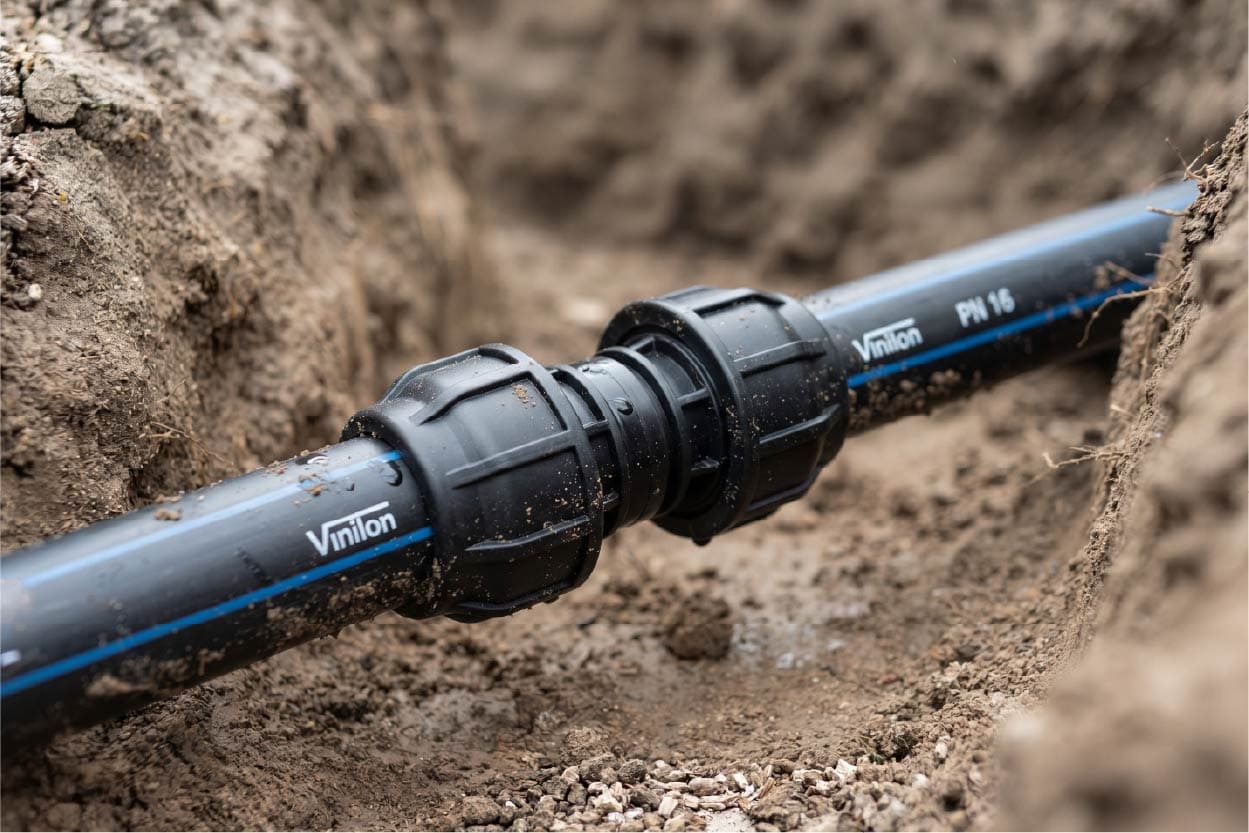
Compression joint fittings can connect HDPE and PVC pipes through a threaded tightening mechanism on the fitting body. Choose the appropriate fitting size to ensure that both pipes are securely and tightly connected.
The steps are as follows:
- Prepare the HDPE and PVC pipes to be connected. Ensure that the PVC pipe used complies with SNI standards.
- Cut the HDPE and PVC pipes perpendicular to their axes using a pipe cutter.
- Loosen the fitting’s locking nut by 2–3 threads without removing it completely.
- Insert the HDPE and PVC pipes into the fitting until they reach the stopper.
- Tighten the nut until it is no longer visible. Use a filter wrench for fittings measuring 50 mm and above.
- Perform a pressure test or hydrotest before operating the installation.
Mistakes to Avoid When Connecting HDPE and PVC Pipes
Avoid the following mistakes when joining pipes:
1. Choosing the Wrong Connection Method
Do not select a joining method arbitrarily. Stub end flange and compression joint connections each have their own advantages and disadvantages, so the choice should depend on the installation requirements and site conditions.
2. Ignoring Sizes and Specifications
Ensure that the diameters, operating pressures, and specifications of both pipes are compatible with the fittings being used. Incorrect sizing can make fittings difficult to install or result in loose connections.
3. Skipping Leak Testing
After installation is complete, check the water flow and inspect for leaks. This step helps identify connection problems before the system is put into operation.
Tips for Choosing the Right Connection Components
To ensure optimal installation performance, follow these tips:
1. Match the Fitting to the Pipe
When determining how to connect HDPE and PVC pipes, consider the pipe type, diameter, and operating pressure to ensure compatibility with the fittings being used. This helps minimize the risk of leaks.
2. Pay Attention to Quality Standards
Choose fittings and connection components that meet the applicable installation quality standards. This helps ensure that the components perform properly.
3. Choose a Brand with a Complete Product Range
Vinilon provides HDPE pipes, PVC pipes, and piping accessories for various installation requirements. A comprehensive product range makes it easier to select compatible components for an entire system.
FAQ
1. Can HDPE pipes be connected directly to PVC pipes without a stub end flange or compression joint fitting?
It is not recommended. Use a suitable transition fitting to ensure a tight connection.
2. When should you use a stub end flange instead of a compression joint?
Use a stub end flange for connections requiring greater strength and for pipe sizes of 2 inches and above. Meanwhile, compression joint fittings are suitable for practical installations involving pipe sizes below 2 inches.
3. How Can You Prevent Leaks at HDPE-to-PVC Pipe Connections?
Ensure that the pipe sizes and fittings are compatible, verify that the specifications meet the requirements, and make sure the connections are tight. Finally, test the connection for leaks before putting the system into service.
4. Does the difference in operating pressure affect the type of connection used?
Yes. Choose fittings and connection methods that can withstand the system’s operating pressure.
5. What should be checked before operating a piping system?
Inspect the connection points, pipe alignment, and the completeness of supporting accessories such as air vents, check valves, strainers, and other components. Finally, perform a leak test before operating the system.
Proper Connections, More Reliable Installations
Connecting HDPE pipes to PVC pipes requires the appropriate fittings and connectors. From selecting the appropriate fittings to checking for leaks, every step contributes to the overall strength and reliability of the piping system.
Using high-quality HDPE pipes, PVC pipes, and compatible fittings from Vinilon, Indonesia’s No. 1 piping brand, can help ensure a more reliable connection and reduce the risk of leaks. With SNI, ISO, and BPJPH Halal Certifications, Vinilon is ready to support various piping requirements. Ensure that the water flowing through your home’s piping system remains smooth and healthy with Vinilon.
Quality pipes and fittings? That’s Vinilon!

