Swimming Pool Pipe Installation: Understanding Piping Routes and Installation Diagrams
A piping system plays an important role in keeping swimming pool water clean and clear. If the swimming pool piping system is not properly designed, water flow can be disrupted, making the filtration process less effective. As a result, water quality may decline, maintenance costs can increase, and the risk of system damage become greater. Therefore, understanding proper piping routes is essential when constructing or renovating a swimming pool. This article explores swimming pool piping systems, including their functions, key components, and common layouts.
Swimming Pool Pipe Installation Components
A swimming pool piping system consists of several interconnected components. Each component has its own function to keep water flowing smoothly and ensure that the filtration process works effectively.
The main components include:
- Pipes as pathways for water distribution.
- A pump to circulate water throughout the system.
- A filter to remove dirt and particles from the water.
- Inlets to return filtered water to the pool.
- A main drain to draw water from the bottom of the pool.
- A surface skimmer helps remove floating leaves, dust, and other unwanted debris.
Understanding Swimming Pool Piping Routes and Installation Diagrams
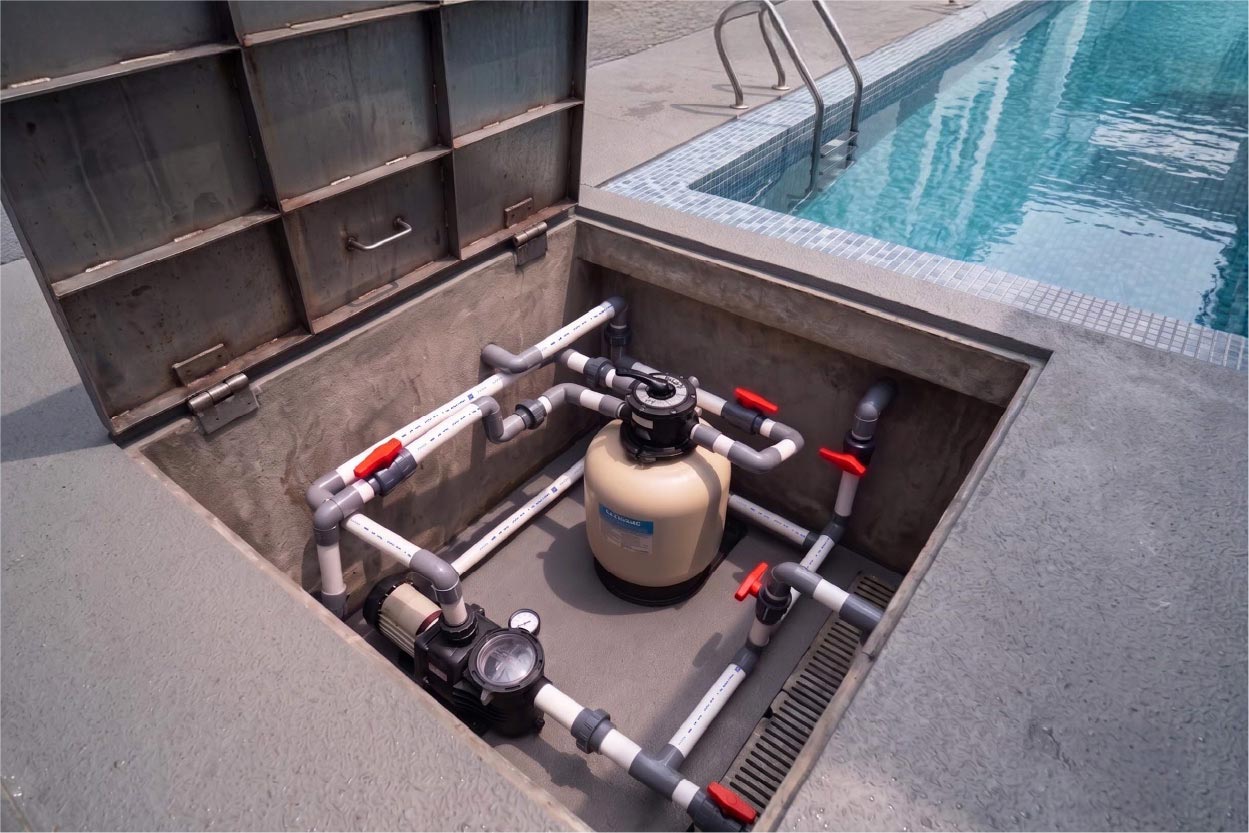
Each component in a swimming pool system is connected through a network of pipes, allowing water to circulate continuously and efficiently. Water typically flows from the skimmer and main drain to the pump, then passes through the filter before being returned to the pool through the inlets.
When reviewing a swimming pool piping diagram, you can see how each component is connected to the others. Understanding these piping routes helps ensure that installation is carried out correctly and makes future system maintenance easier.
When designing the piping layout, make sure to consider the following:
- Design the piping routes as efficiently as possible.
- Minimize unnecessary bends.
- Use pipe sizes that match the system’s capacity.
- Make sure all connections are properly installed and secured.
Tips for Choosing Pipes for Swimming Pool Installation
In addition to planning the piping layout, the quality of the pipes used also affects the system’s long-term performance. Choosing the right pipes helps maintain smooth water flow and reduces the risk of damage.
Here are some factors to consider:
- Choose pipes and fittings that are resistant to high pressure and corrosion.
- Select pipe dimensions based on the pool’s capacity.
- Opt for products from a trusted manufacturer and ensure consistent quality
For a more reliable installation, consider products from Vinilon. As the No. 1 Pipe Brand in Indonesia, Vinilon provides high-quality PVC pipes and fittings for a wide range of installation needs, including swimming pool systems.
Frequently Asked Questions
Water from the pool flows through the skimmer and main drain to the pump, then passes through the filter before returning to the pool through the inlets.
Improper installation can disrupt water flow, making circulation and filtration less effective.
Pipe diameter should be determined based on the pool’s capacity, water flow rate, and the specifications of the pump being used.
No. The piping layout depends on the pool’s size, circulation system, and installation requirements.
High-quality PVC pipes are more durable, corrosion-resistant, and help ensure that the piping system operates efficiently.

